Most people aren’t familiar with the name Rose Valland. That’s fair enough. In the whole wide realm of World War II heroes, it’s easy to overlook one woman who seemed, at first glance, rather unexceptional. Yet, Rose Valland is one of the most decorated women in French History, and for good reason.
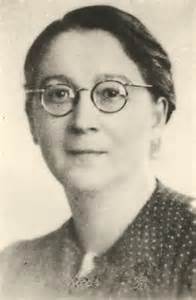
I was reminded of my sincere admiration for Valland when I saw The Monuments Men last weekend. It was a decent film, but, being somewhat familiar with the events that inspired the film (and the book on which it is based), I was a little disappointed. It isn’t that they stretched the truth a bit (and by “a bit” I mean “a lot”). I was prepared for exaggeration in the name of entertainment. What disappointed me was the addition of Rose Valland (“Claire Simone” in the film) as a token female.
In actuality, Valland was no one’s token female. Rose Valland was a hero in her own right. Due to her hard work and magnificent memory, Valland helped the scholar soldiers known as the Monuments Men to locate countless works of art. In The Monuments Men, Cate Blanchett is lovely and talented as ever, but she gives her character a stereotypical French, almost coquettish, charm that seems dishonest to the memory of the real Rose. Despite her bookish glasses, Claire Simone appears to be a stylish and self-confident woman.
The real Rose Valland, on the other hand, was significant for how very unremarkable and mousy she seemed. During WWII, when the Nazis were stealing and destroying priceless pieces of art, Valland was observing and recording their actions. She was a curator at the Jeu de Paume Museum in Paris, which is where the looted art was stored until it was either selected for the private collections of high-ranking Nazi officials or shipped off to be stored in various secret locations to await the war’s end. Valland was allowed to keep her post at the museum after the Nazi’s took control of Paris, and it was precisely because she seemed so harmless and unassuming. None of the Nazis realized that she understood German. For four years, she kept her eyes and ears open during the day, and kept all the information stored in her memory until she could return to her home. Once safely away from prying eyes, she recorded all the information she could recall. She then risked her life to give information on the transport of the art to the French Resistance, ensuring they would not mistakenly blow up a train car full of modern masterpieces. In one instance, she learned of a train that would be departing Paris with five whole cars filled with art. She informed her contacts in the Resistance, and they ensured the train was taken and the artwork retrieved.
It is because of Rose Valland that many stolen works were returned to their rightful owners with surprising efficiency. Art of such obvious cultural importance being restored to private collectors and public museums undoubtedly played an important part in the healing process after the war. What Valland did should not be minimized in any way. That is why I was dismayed to see her portrayed as a sort of nerdy femme fatale, whose physical attraction to one of the Monuments Men received more screen time than her actual work in the museum. I enjoyed the film a great deal, but I left feeling unsatisfied. I wanted more of “Claire” and less of the war hijinks. If they ever make a movie entirely about Valland’s life and work during the war, I think I’ll be first in line.
Obviously, this post skims over a lot of important historical information. I would encourage everyone interested to watch the documentary The Rape of Europa. I first learned about Rose Valland from that film, and it inspired me to do more research. It’s an excellent documentary, by the way, and I highly recommend it.
 What Are Cows?
I still need to see Rape of Europa…been wanting to for a while. I enjoyed Monuments Men (man, I love Bill Murray), but I agree…I didn’t care for the direction they took Claire’s character. I didn’t know the true history, but it does seem Hollywood always has to skew things to satisfy a “general” audience. I told Ethan, if Matt Damon had taken her offer I would’ve been really pissed although I was annoyed that she even asked…didn’t seem like her style especially for that era. The intelligent audience doesn’t always need romance/sexual tension in a film. As an artist and film buff, I personally don’t need sex in a film to view it as successful. In fact, if a film can go without, I applaud it because it produced a story that stayed on topic and didn’t give into the norm.
I’ve been telling people that the movie is worth seeing if only for Bill Murray’s performance. I think The Rape of Europa might still be on Netflix instant.